Meet Dr. Beam
I’m a psychiatrist, psychotherapist, & scientist
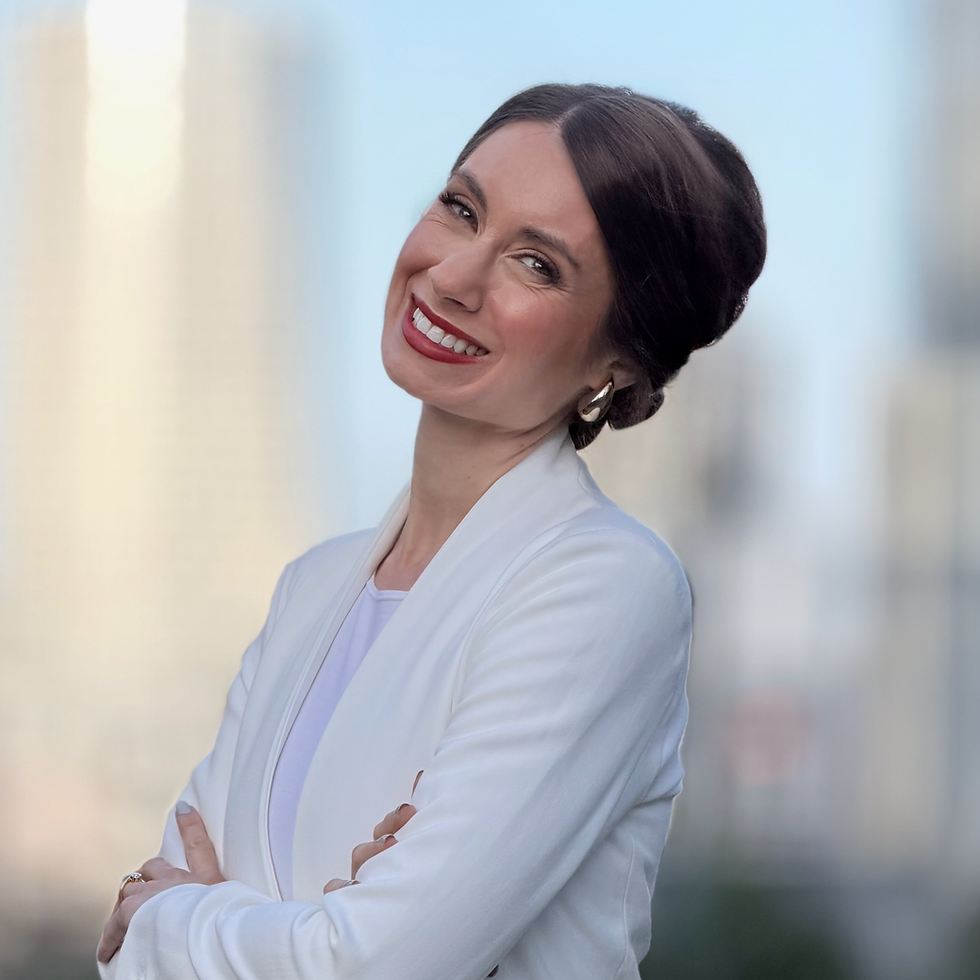
At the center of my clinical work is the conviction that stories matter. The stories we tell about ourselves, and the stories we cannot yet tell, shape how we experience our lives, relationships, and symptoms. I'm interested in how personal narratives intersect with the ways our bodies function, how we are shaped by families and cultures, and how unconscious patterns can influence thoughts, feelings, and behavior. In psychotherapy, I aim to create a space where these connections can be explored with curiosity, compassion, and respect.
My research has focused on understanding how the brain gives rise to the mind. During my doctoral training, I developed computational approaches to synthesize the neuroimaging literature, creating a knowledge framework for relationships between brain circuitry and mental function. I am currently working to derive circuit-anchored speech markers of treatment response through novel applications of artificial intelligence tools. I believe these powerful methods lead to the most meaningful results when integrated with the stories that make each person unique.
who strives to understand the whole person from an interdisciplinary perspective. My training over a decade at Stanford has included MD/PhD studies in neuroscience, psychiatry residency, and ongoing research. I've also pursued further training in psychoanalytic psychotherapy through the San Francisco Center for Psychoanalysis. My work is guided by the belief that we can best address mental health concerns when we consider biological, emotional, relational, and cultural dimensions together.
Psychoanalytic Fellowship Program
2025 - 26
American Psychoanalytic Association
Psychoanalytic Psychotherapy Training Program
2024 - 26
San Francisco Center for Psychoanalysis
BA
2009 - 13
Duke University
Thesis in English
Advisor: Deborah Pope
BS
2009 - 13
Duke University
Thesis in Neuroscience
Advisor: Scott Huettel
Ketamine-Assisted Psychotherapy
2025 - Present
Stanford Health Care
Residency in Psychiatry
2022 - 26
Stanford Health Care
PhD
2017 - 21
Stanford University School of Medicine
Thesis in the Neurosciences
Advisors: Amit Etkin, Russ Poldrack
MD
2015 - 22
Stanford University School of Medicine
Medical Scientist Training Program
Education
Clinical Training
Selected Publications
01
Beam, E.H., Potts, C., Poldrack, R.A., & Etkin, A. (2021). A data-driven framework for mapping domains of human neurobiology. Nature Neuroscience, 24, 1733-1744. DOI: 10.1038/s41593-021-00948-9.
02
03
Siless, V., Davidow, J.Y., Nielsen, J., Fan, Q., Hedden, T., Hollinshead, M., Beam, E.H., Bustamante, C.V., Garrad, M.C., Santillana, R., Shaw, E., Hamadeh, A., Snyder, J., Drews, M.K., Van Dijk, K.R.A., Sheridan, M., Buckner, R.L., Somerville, L.H., & Yendiki, A. (2020). Registration-free analysis of diffusion MRI tractography data across subjects through the human lifespan. NeuroImage, 214(116703). DOI: 10.1016/j.neuroimage.2020.116703.
Beam, E.H., Appelbaum, L.G., Jack, J., Moody, J., & Huettel, S.A. (2014). Mapping the semantic structure of cognitive neuroscience. Journal of Cognitive Neuroscience, 26(9), 1949-1965. DOI: 10.1162/jocn_a_00604.
2025 - 27
Inaugural Research Training
Program Certificate
American Psychoanalytic Association
Honors & Awards
T32 Biobehavioral Research Fellowship
National Institutes of Health
2025
Leah J. Dickstein Medical Student Award
Association of Women Psychiatrists
2017
Summa Cum Laude
Duke University
2013
Schutt Senior Award for Outstanding Contributions in Creative Writing
Duke University
2013
Critical Essay Award
Duke University
2012
Angier B. Duke Full-Tuition Memorial Scholarship
Duke University
2009 - 13
F30 Pre-doctoral Research Fellowship
National Institutes of Health
2020 - 22
Trailblazing Trainee Award
Stanford University, Department of Psychiatry & Behavioral Sciences
2024 - 25
